

I had a scary boondocking experience in the desert of Arizona, so I put together this guide to RV security tips to keep you safe.

In This Article
-
Whether or not RV living is actually safe
-
Personal safety habits for the road
-
Emergency supplies every RVer should have on-hand
-
How to protect your RV from break-ins
-
Campsite safety for parks and boondocking
-
How connectivity keeps you safe
-
RV driving safety
-
A pre-trip RV safety checklist and risk-prevention table
-
FAQs
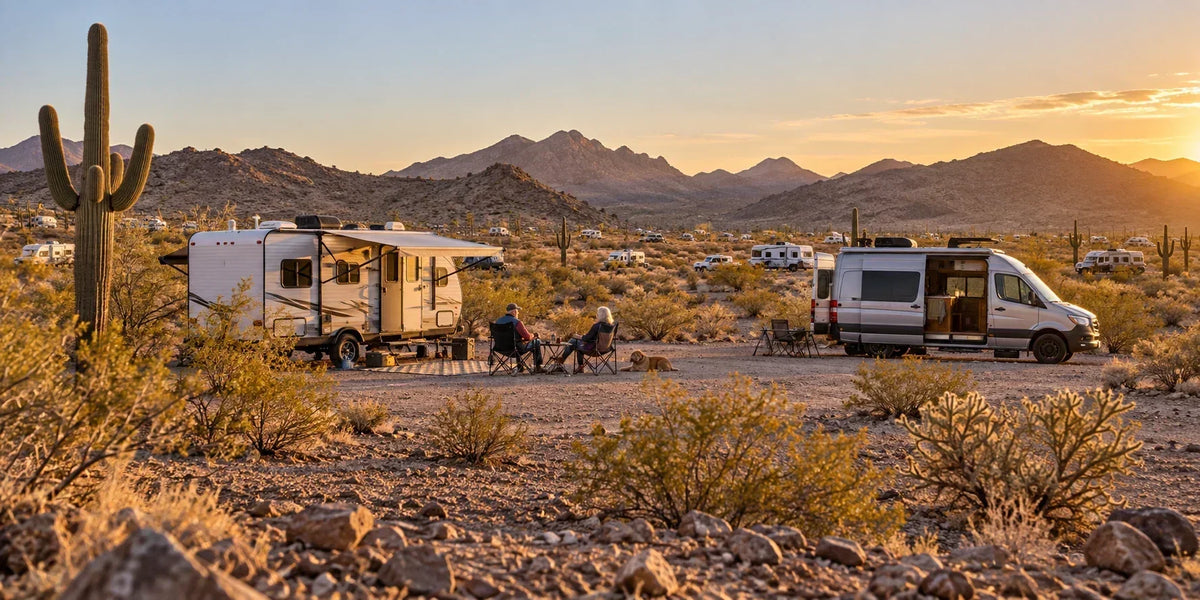
We turned off the highway onto a narrow dirt road in the middle of nowhere. The sun had already set, and half a mile later, a Bureau of Land Management sign appeared: Good, at least we were on public land. But I still felt uneasy pulling into a remote site at dusk with no time to scope it out. A few rigs were already parked, so we kept going until we found a flat clearing. But three large, zipped-up event tents stood around it. Weird. My husband peeked inside: bins of party supplies, folding chairs, an empty tent with a lone hammer on the ground. Weirder. We decided to stay, not sensing a real threat. Thirty minutes later, headlights and flashlights cut through our van. A convoy of SUVs rolled up. We left immediately—no harm done, but lesson learned.
That story is exactly why knowing how to stay safe in an RV matters. Camping is usually safe, and most RVers are good people. Still, odd situations happen. With the freedom of RV life comes the responsibility to keep yourself, your loved ones, and your gear secure. Our guide hits the common RV mistakes and rookie missteps that create safety risks.
TL;DR
When it comes to RV camping safety tips, arriving at camp before dark, locking all doors and windows, maintaining your rig, carrying emergency supplies (first aid, water, satellite communicator, etc.), and being able to call for help when cell service drops are the key players. Trust your gut when the campsite feels off, share your location, and know how to get to the nearest hospital. Trip preparation is the most important tool in preventing emergencies.
Experts Who Contributed to This Guide
-
Nate and Christian Axxness of ProjectTrek, contributed expertise to this article.
-
Kate Mullen of The Road to Adventure, contributed expertise to this article.
-
Jeff Ketelaars, Co-Founder at Security Guards Only, contributed expertise to this article.
-
Jeremy Gocke, Founder at Entropy Survival, contributed expertise to this article.
-
Colt Fetters, spokesperson at REDARC, contributed expertise to this article.
-
This article was written by Amanda Capritto, TravlSync editor and full-time vanlifer.
-
This article was updated by Lauren Keary, experienced travel journalist.

Is RV Living Safe?
The realistic risks of RV travel break down into a few categories, which include mechanical issues on the road, theft (rare but real), wildlife in remote areas, weather, medical emergencies, and the occasional sketchy campsite. Preparation can save you from most of them. Pre-trip inspections handle the mechanical risks, locks and lighting handle theft, smart campsite selection handles wildlife and unsafe locations, and a real emergency kit handles the medical side.
The most important RV living safety habits are the boring ones. Inspect your rig before every trip, arrive at campsites with daylight to spare, lock your doors at night the same way you would at home, keep emergency supplies stocked, refreshed, accessible, and in a known location, stay reachable, etc. Whether you're full-timing in a Class A or weekend-tripping in a teardrop trailer, those habits cover the majority of the risk.
Personal Safety Tips for RV Travelers
Personal safety on the road requires a bunch of small decisions that will add up to a safer trip. The RVers who travel for years without incident are the ones who consistently make these decisions.
Trusting Your Instincts When Choosing Campsites
First things first: trust your gut. My husband and I broke that cardinal rule in the desert, and it didn't take but a few minutes for my intuition to prove itself right. Never stay in a campsite where something feels off, even if you can't put your finger on what's not right. There's always another campground.
Arriving at Campsites Before Dark
Try to get to camp before dark so you have time to survey the area and note the people, wildlife, terrain, and exits nearby. When you arrive in the dark, you don't have the opportunity to check for threats, and you'll be setting up by flashlight, which is its own kind of unsafe. Stick to the 3-3-3 rule (drive no more than 300 miles, arrive by 3 p.m., stay at least three nights).
Sharing Your Travel Plans and Location
"Always know your GPS coordinates in case you need to call 911," say the Axxnesses of ProjectTrek. "It's also a good idea to share those coordinates with someone you trust and communicate with often. Lastly, be sure you know where the closest emergency room is." Apps like Find My, Life360, Glympse, or a satellite messenger's tracking feature make sharing your location effortless. If you're boondocking far from cell service, send coordinates before you leave the last town.
Knowing Emergency Contacts and Nearby Hospitals
Every time you arrive in a new area, take five minutes to note the nearest hospital, urgent care clinic, police non-emergency line, and ranger station. Save them on your phone; cell service may not let you Google in a real emergency, so having those numbers ready before you need them is one of the simplest RV security tips you can practice.
Essential Emergency Supplies Every RVer Should Carry
As Nate and Christian Axxness of ProjectTrek put it, "Don't be caught without something you really need. Pack emergency items (like a first aid kit, emergency blankets, tools, spare tires, extra fuel, paper maps, satellite communicator, etc.). You may never use these things, but if you need them, you'll sure be glad you packed them."
A real emergency kit is the difference between an inconvenience and mayhem. Build yours once, refresh it once a year, and forget about it until you need it.
First Aid and Trauma Kits
A good base kit handles cuts, sprains, burns, headaches, and allergic reactions. Add a trauma layer for serious injuries (tourniquet, hemostatic gauze, chest seals, and a CPR pocket mask if you're trained). Include any prescription medications, an EpiPen if relevant, and a written list of allergies and medical conditions for everyone in your traveling party.
Water, Food, and Survival Supplies
Jeremy Gocke, founder of Entropy Survival, recommends every RV-dweller and vanlifer keep these essentials on hand: water (3+ days supply) and purification tools, a medical kit with trauma supplies, reliable comms (satellite messenger or radio), recovery gear (straps, shovel, traction boards), and fire-starting tools and shelter (tarp, bivy). "These are mission-critical for hydration, injury response, rescue communication, vehicle extraction, and surviving exposure, regardless of season or terrain," Gocke says. Round out the kit with an emergency blanket for every person, a quality flashlight with spare batteries, a multi-tool, and paper maps for when you don’t have GPS.
Communication Tools (Satellite Messengers, Radios)
A satellite communicator like a Garmin inReach or Zoleo is a lifeline when you're out of cell range. These devices let you send an SOS to emergency responders from anywhere on the planet, plus two-way text messaging via satellite. A handheld two-way radio (FRS or GMRS) is useful for staying in touch with those you’re traveling with in low-signal areas, and Apple's Emergency SOS uses satellite to route emergency texts when cellular drops.
Vehicle Recovery Gear and Spare Parts
Beyond survival gear, you need to have a system that can restart your engine if it fails to turn over. "One of the most frustrating (and realistic) emergencies is getting stuck in the middle of nowhere with a dead starter battery," says Colt Fetters, spokesperson at REDARC. "And it doesn't matter how many traction boards or winches you're carrying — if your engine won't turn over, you're not going anywhere." Fetters recommends a DC-DC charger with solar input, calling it "one of the most underrated pieces of gear you can install." Add a spare tire (verified inflated and accessible), a quality jack rated for your rig, traction boards, a tow strap, jumper cables or a portable jump starter, and a small parts kit with extra fuses, bulbs, and hose clamps.
Read TravlFi's complete guide to overlanding survival and download our emergency gear checklist.

How to Protect Your RV From Theft
RV theft prevention comes down to deterrence. Most thieves are opportunists, and opportunists skip it when a target looks like work.
Installing RV Security Cameras
It’s imperative to always watch your surroundings, especially when you're in unfamiliar territory. A surveillance system with cameras that provide real-time footage can help scare off potential robbers and give you a sense of security. Modern wireless cameras like the Arlo, Reolink, Wyze, and Blink lines run on batteries or solar, connect to your phone, and record motion-activated clips. Mount one over the entry door and another covering exterior storage compartments.
Personally, I run a WOLFBOX rear and front dashcam off my house battery, which doubles as parked-vehicle surveillance. Real cameras are best, but even visible-only "dummy" cameras deter most opportunists. A sticker that says "NOTICE: Vehicle Is Equipped With Audio and Video Surveillance" still does a lot of work on its own.
Upgrading RV Locks and Deadbolts
The first line of defense for any RV is a good set of locks. Make sure all doors, windows, and storage compartments have sturdy, high-quality locks. Consider upgrading to deadbolts or adding additional locking mechanisms. This includes steering wheel locks and boot locks on wheels to prevent theft of the RV in its entirety.
Many full-timers swap to higher-grade replacements (RVLock is a popular option) and add a deadbolt for the entry door. A simple wheel lock, hitch lock, steering wheel lock, or boot lock on a parked rig adds another layer of physical security and discourages anyone considering taking the whole vehicle.
Motion Lights and Security Deterrents
Solar-powered motion lights mounted around your rig discourage anyone looking for darkness. Add a small battery-powered alarm on entry doors and storage bays, and the combination of light, noise, visible cameras, and warning stickers is enough to deter almost any opportunist.
Keeping Valuables Out of Sight
I know, I know. It’s incredibly annoying to pack up all of your stuff when you leave your campsite and unpack it when you return. And the reality is, in most established campgrounds, you don’t need to. Theft of personal effects in that setting is unlikely. But it’s not impossible, and packing up is the only surefire way to prevent it.
Lock up valuables, use your window shades when you leave, and don't leave laptops, cameras, tablets, or expensive gear visible through windows. For bigger belongings like bikes, scooters, or grills, a strong U-lock goes a long way. A small fireproof safe bolted to the rig is worth it for passports, titles, jewelry, and other irreplaceable items.
RV Campsite Safety Best Practices
Where you park and how you set up make a difference in your RV camping safety.
Choosing Safe Campgrounds and Boondocking Locations
State and national parks, KOAs, Harvest Hosts spots, and well-reviewed private campgrounds are safe most of the time. For boondocking, stick to established BLM and Forest Service dispersed camping areas, scout in daylight, and read reviews on Campendium or iOverlander. Avoid pull-offs that feel isolated or that locals have warned about. These boondocking safety tips matter most where there's no host or ranger to lean on.
Parking for Quick Exits
Always park so you can leave without backing up if you have to (nose out, hitch attached when it can be, and a clear line to the road). It's a habit that can pay off when you need to leave fast.
Locking Doors and Windows at Night
Even at remote boondocking sites, lock all entrances to your RV. Even if you're far from the nearest humans, wildlife could enter through unsecured doors. (Yes, bears are known to open car doors.) Many full-timers add a portable door alarm or a piece of dowel rod to block sliding windows.
Managing Visibility and Privacy
Close shades and curtains at night so you're not silhouetted against interior lights. Keep exterior lighting pointed away from your rig, so you don’t have a spotlight on your front door. Window film or reflective covers add daytime privacy too.
Internet and Communication Safety on the Road
The ability to call for help, look up a hospital, or reach a friend in a remote area is itself a safety feature.
Why Reliable Internet Matters for Safety
A working data connection lets you check weather, road conditions, campground reviews, and emergency services in real time. It's how you research a sketchy spot before you commit to it, reach 911 if your phone has weak signal but data works, look up the nearest urgent care, and stay reachable to family. A solid RV Wi-Fi setup is a true safety investment.
Staying Connected in Remote Areas
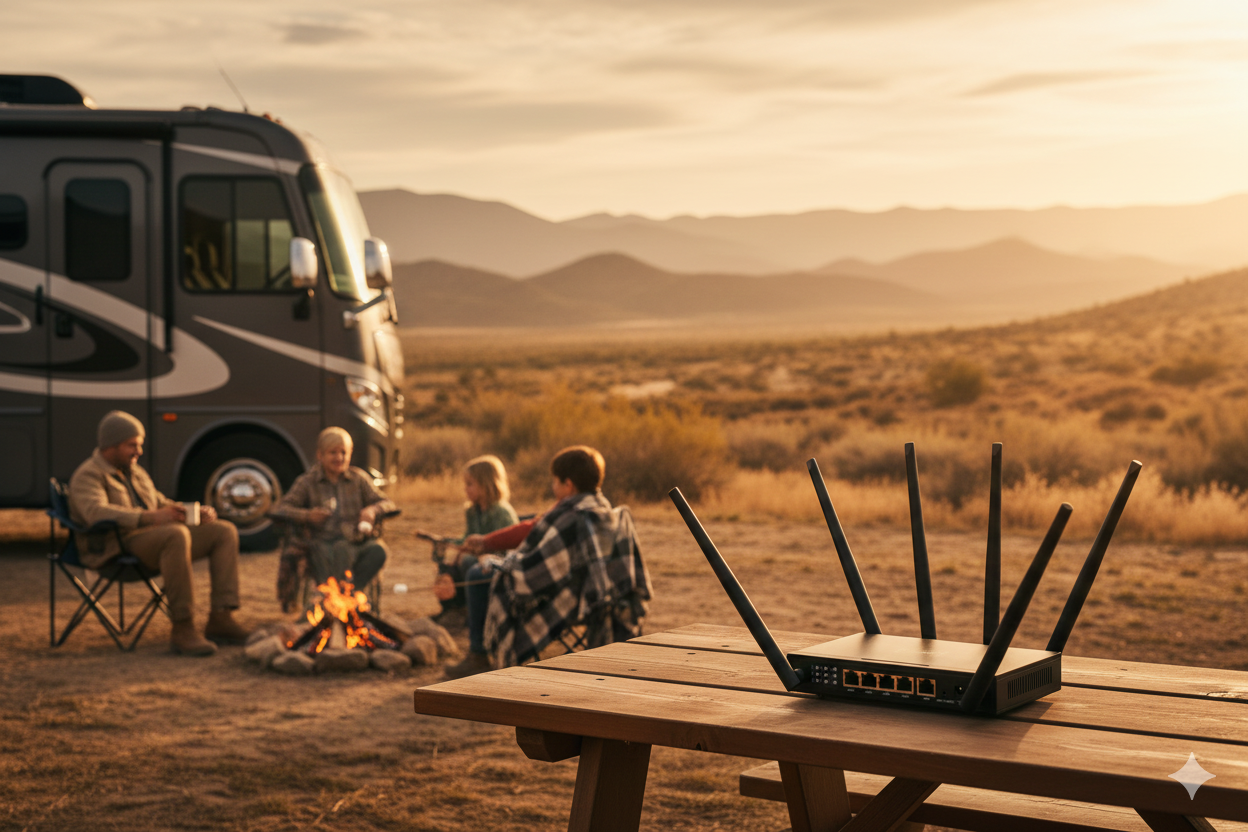
Cellular coverage drops off often in mountains, forests, and deserts. A multi-network cellular router gives you the best chance of finding signal in these areas. Add a signal booster for places where you want to turn one bar of service into an actually usable connection. TravlFi's unlimited RV internet and pay-as-you-go data plans are built for unpredictable travel moments.
Emergency Communication When Cell Service is Limited
Devices like the Garmin inReach Mini, Zoleo, SPOT X, and ACR Bivy Stick all offer two-way satellite messaging plus an SOS button that contacts emergency responders 24/7. For RVers who boondock or travel through coverage gaps, a satellite messenger is one of the best safety upgrades available. Starlink Roam is another option for full satellite internet (it can provide browsing-grade connectivity nearly anywhere with sky view). Our TravlFi vs Starlink breakdown walks through what you get from each.
RV Driving Safety Tips
Driving an RV really requires solid prep, and if you choose a spontaneous trip over a prepared one, you’ll likely run into safety issues along the way.
Pre-trip RV Safety Inspection
Keep your RV maintained and serviced regularly, and double-check everything before you go. This includes all fluids, filters, hitch and tow vehicle connections, tire tread and pressure, pullouts/retractables, windshield chips and cracks, wheel lug nuts, and more. You can download TravlFi’s RV pre-trip checklist to ensure you don’t miss anything.
Managing Weight and Towing Safely
Know your Gross Vehicle Weight Rating (GVWR), tongue weight (for travel trailers), and hitch capacity. Overloading strains brakes, tires, and suspension and can void your warranty. Weigh your loaded rig at a CAT scale before any long trip (water tanks, propane, and gear add up faster than you'd expect).
Defensive Driving for Large Vehicles
RVs are tall, long, and wide, with stopping distances that can be a shock to novice drivers. Leave bigger following gaps, slow earlier for turns, and don’t suddenly change lanes. Crosswinds and the wake from passing semis can push a rig sideways more so than you’d expect, so keep both hands on the wheel, especially on bridges and exposed highways.
"Keep call numbers handy or programmed in your phone and be prepared to advocate for the level of service you feel is required," notes Kate Mullen of The Road to Adventure. “If you do not have a tow vehicle, consider an e-bike as a back-up or Lyft/Uber car services (depending on availability in the area) that could transport you to a safer location.”
Using Dash Cams and Driver Alerts
A dash cam can save you from he-said-she-said situations and insurance hassles if you get in an accident. With a dash cam—ideally front and rear—the video recording says it all. Systems like Garmin or BlackVue also have lane-departure and forward-collision alerts for tiresome long driving days.
And when you're driving, drive. Your passenger can be your DJ, GPS, and snack provider. If you’re traveling solo, get your route and playlist loaded before pulling out of the driveway. Keep a stash of snacks and drinks within arm’s reach or pull over for a break.

RV Safety Checklist Before Every Trip
Keep this list on hand to quickly go through before each departure.
Before You Leave
-
Inspect tires and lug nuts
-
Check hitch and tow connections
-
Verify all lights and signals
-
Confirm propane is off and secure tanks
-
Secure interior items
-
Retract awning, slide-outs, antennas, and steps
-
Confirm emergency supplies are on board and accessible
-
Charge satellite messenger and check subscription
-
Test internet device and make sure data plan is active
-
Share your location(s) and ETA
Top RV Safety Tips
-
Get to your campsite before dark, always
-
Lock doors and windows at night
-
Carry real emergency supplies (first aid kit and satellite communicator)
-
Use motion lighting, cameras, and visible deterrents
-
Share your travel location with someone outside your travel group
-
Trust your gut on any campsite that feels sketchy
|
Risk |
Why It Happens |
Prevention |
|
RV theft |
Visible valuables, weak factory locks |
Upgraded locks, cameras, motion lighting, shades closed |
|
Getting stranded |
Skipped maintenance or pre-trip checks |
Pre-trip inspections, spare tire, jump starter, recovery gear |
|
Unsafe campsites |
Booking blind or arriving late |
Research campsites, arrive in daylight, trust your instincts |
|
Lack of communication |
Out of cell range |
Router, hotspot, booster, satellite |
|
Medical emergency |
No contacts on hand or first aid kit |
Trauma kit, nearest-hospital lookup, satellite SOS |
|
Weather damage |
Awning out, slides extended in storms |
Check forecast, retract awnings, monitor radar |
|
Driving incidents |
Speed, fatigue, weight |
3-3-3 rule, defensive driving, weighed rig |
FAQ: RV Safety
Are RVs safe to live in full-time?
Generally speaking, yes. As a full-time RV-er, I would argue that I feel much safer living in my van than I ever did living in a busy city, and even in some suburbs. I tend to boondock, so my greatest threats are typically wildlife. But in campgrounds, there is often some kind of security presence; plus, RVers are some of the kindest people I have ever met.
How do you prevent RV theft?
Lock up your valuables, doors, and windows; close your window shades; install cameras and motion lighting; and use stickers that tell thieves there’s surveillance on your rig.
What should you do if someone tries to break into your RV?
If you think someone is breaking in, stay calm and don’t confront them. Lock yourself in a secure area (like the bedroom or bathroom), call 911, and make noise to draw attention. Use a panic alarm or horn if you have it. And keep your keys, phone, and a flashlight near you when you’re sleeping, so you can act quickly if something happens in the middle of the night.
How do you stay safe while boondocking?
When boondocking far from fellow RVers, focus on deterrence. Install motion lights or battery alarms, park where you can easily drive away in an emergency, and share your location with a trustworthy friend or family member. A satellite communicator can save you if you’re out of cell range. Additionally, keep expensive items out of sight.
What safety gear should RVers carry?
A first aid and trauma kit, fire extinguisher, three days of water and food, satellite communicator, paper maps, multi-tool, flashlight with spare batteries, jumper cables or portable jump starter, spare tire (verified), and a toolkit. Add wheel chocks, traction boards, leveling blocks, and a tire repair kit if you boondock or travel rough roads.
How safe is RV camping?
RV camping is one of the safer forms of travel if you use established campgrounds and keep consistent safety habits. Most incidents are preventable mechanical problems or theft of items you left out.
More Essential Reading for RVers
-
How to Secure Your RV Wi-Fi in 2026: Expert VPN and Network Setup Tips
-
Starlink and T-Mobile Say “No More Dead Zones”—Here’s What That Means for Off-Grid Travelers
Which TravlFi Device Is Right for You?
TravlFi keeps you connected on the road. Not sure which device is best for you? Compare below.

Reliable connectivity is part of staying safe on the road. Learn more about TravlFi devices and pay-as-you-go data plans.

Share: