We’ve got the details on getting a seamless internet connection for camping, whether you’re in a campground or boondocking in the desert.

In This Article
-
What you need to know about RV Wi-Fi in 2026
-
Primary ways RVers connect to the internet
-
Most popular RV internet options compared
-
How to choose the right rv internet solution
-
FAQs about RV Wi-Fi
Staying connected while in your RV isn’t a “well, we’ll just wing it” task. Avid RVers end up traveling to all types of places, some urban and some very remote. This guide walks you through all the ways to get internet in your RV—from cellular hotspots and routers to satellite internet and campground WiFi—so you can decide what’s best for your personal travel style.
TL;DR
Staying connected to who and what you love while traveling the open road can be frustrating. If you’ve ever wondered how to get internet in your RV, it generally comes in three different packages: cellular data (via hotspots and routers), satellite internet, and campground WiFi. The right option for you depends entirely on your travel preferences, data needs, and budget though.
Experts Who Contributed to This Guide
-
This article was written by Amanda Capritto, TravlSync editor and full-time vanlifer of two years.
-
This article was updated by Lauren Keary, an experienced travel writer.
RV Internet in 2026—What You Need to Know
Though RV internet has come a long way since its conception, the setup and potential inconsistencies are still much different than what you’re used to at home. Here’s what to look out for.

Why RV Internet Is Different from Home Internet
When you’re at home, your internet access comes from a fixed connection that utilizes a cable or fiber line in your house. When living in an RV, that connection turns mobile. You’re switching between cell towers, moving through different coverage zones, and parking in locations that range from urban centers to remote BLM land.
If you want to stay connected, your internet needs to be portable, flexible, and functional with whatever signal is available wherever you are in the world. There’s no objective “best” option for every RVer out there; it all depends on what types of locations you travel to, how much data you use, and how much you are streaming, gaming, or taking video calls throughout your day.
Common Challenges for RV Connectivity
In general, lack of cellular coverage, not having enough data available, and difficulty connecting are all issues many RVers run into, leaving them to sacrifice their ability to stay connected to who and what they love when and wherever they want. When thinking about how you’re going to stay connected from your RV, there are a few things you’ll want to think about:
-
How often do you travel?
-
Are you ever traveling internationally?
-
What are you using your RV WiFi setup for (streaming, work, browsing, etc.)?
-
How many devices do you have that need a connection?
When you’re on the move, your signal will vary based on geography. Dense forests, mountains, and deserts are often the worst locations when it comes to consistent service. Campground WiFi (while free) is shared among many users, so it’s rarely reliable for extended periods or any kind of streaming. And data caps can sneak up on you—even “unlimited” plans often limit speeds when you reach a certain threshold.
Primary Ways RVers Connect to the Internet
There are a few different ways to stay connected from your RV. Ideally, you’ll have various options ready before you hit the road, so you aren’t left stranded without a signal when one of those options falls through.
Cellular Data (LTE & 5G)
Cellular data (or “mobile data”) is the internet delivered to your device through cell towers. It’s the same technology your phone uses when you’re testing or browsing off of WiFi. For RVers, cellular data runs most mobile connections, whether you’re using your phone’s built-in hotspot or a separate mobile hotspot device (more on that later).
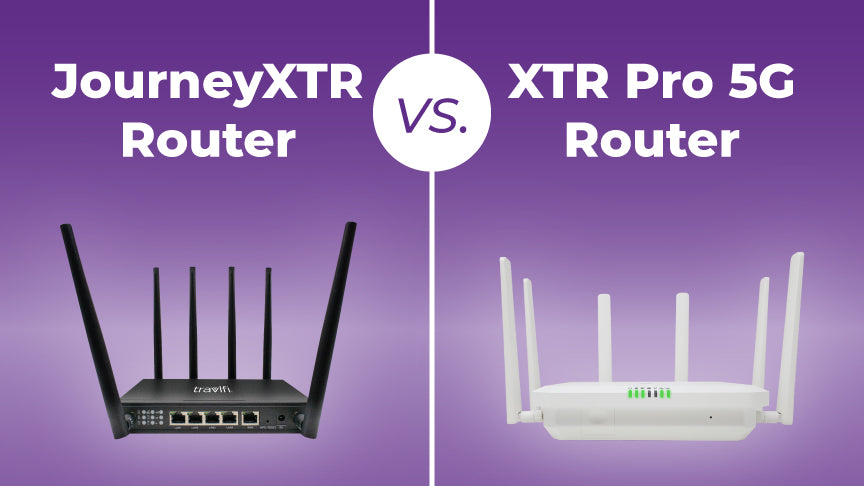
There are two different cell connections: 4G LTE and 5G. LTE is widely available across the U.S., even in more rural areas. 5G is newer and faster—but its coverage is still growing, and it’s most consistent in more urban areas. Many newer RV internet devices (like TravlFi’s XTR Pro 5G Router) support both 5G and 4G LTE.
Read more about LTE vs 5G for RV internet.
Mobile Hotspots and Routers
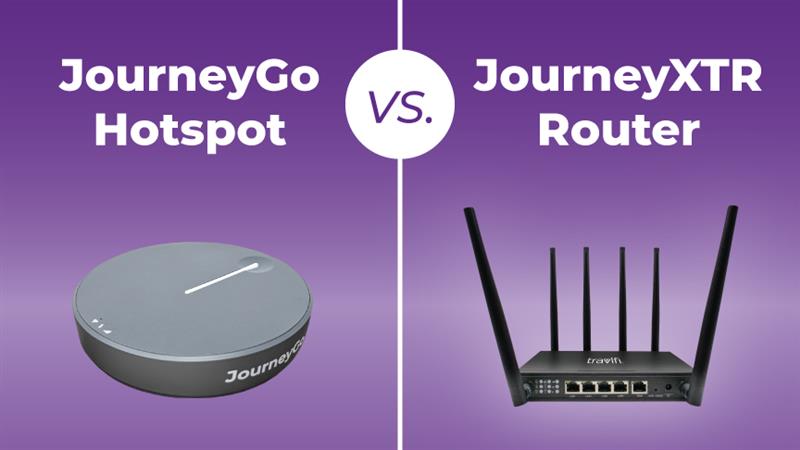
Most of us are familiar with a cell phone hotspot, which is a feature on your smartphone that uses the data provided by your network to allow other devices to connect to it as a source of WiFi. But a dedicated mobile hotspot is a separate device, like the TravlFi JourneyGo, that connects to all data networks, rather than just one (leaving fewer gaps when you’re on the move).
The JourneyGo is a small, mobile hotspot that is powered by pay-as-you-go data plans. Considering everyone has a different Wi-Fi demand, TravlFi offers an array of plans that range from 2 GB all the way to unlimited. Remaining connected to a single cellular network doesn’t offer much flexibility when you are on the road, which is why TravlFi (and many other mobile hotspots) connect to all major data networks at no additional cost.
A router (like TravlFi’s XTR or XTR Pro 5G Router) is a bit more permanent, and many full-timers start with a hotspot and upgrade to a router as they build out their RV setup. You install a router directly in your RV, so it’s not as mobile as a hotspot. But it offers a better signal paired with an antenna and can support multiple devices more effectively than a mobile hotspot.

Campground Wi-Fi
Often, RV parks will offer free WiFi to their campers and visitors. Unfortunately, while being connected through free public WiFi may sound great for financial purposes, there are a few downsides—like proximity to the WiFi access point in the campground, the multitude of guests at the park, and maybe most importantly, security.
In today's world, cybercrime is becoming more and more popular (and advanced), and many public WiFi options can’t fight off malicious activity. While the RV park offering the WiFi connection has no intention of doing you dirty, the lack of WiFi security could quickly land you (and your personal data) in troubled waters.
Satellite Internet
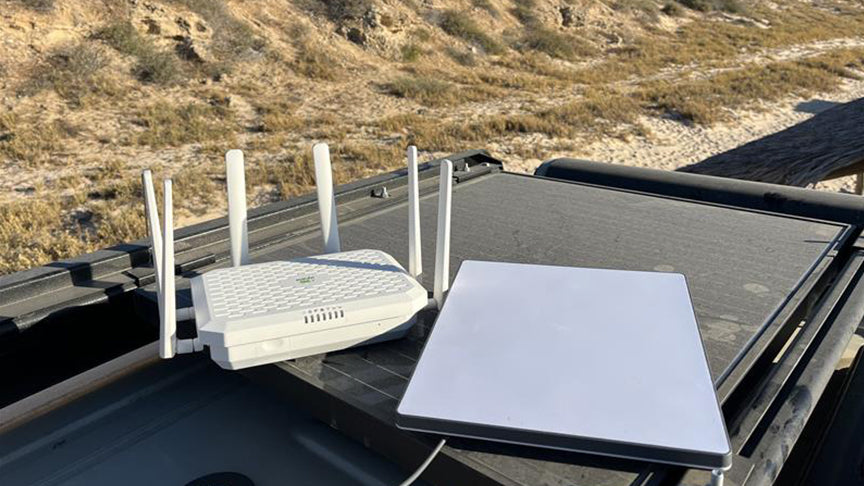
Satellite internet is a game-changer for RVers who travel out of cell service zones. With satellite connectivity, your signal comes directly from orbiting satellites rather than nearby cell towers, which means you can get online in remote mountains, deserts, or national parks where there are no cell towers in sight. Providers like Starlink have made satellite connection more accessible and faster than older systems.
However, satellite internet isn't perfect. Equipment costs can be steep, setup requires a clear view to the sky, and heavy data usage adds up fast. Heavy rain and snow can also affect your signal. For travelers who spend most of their time near populated areas, a reliable mobile hotspot or cell plan may be a better option. But for those who love true off-grid exploration, satellite internet can fill the gaps cell towers can’t reach.
Emerging Tech: Direct-to-Cell
Direct-to-cell tech is a fairly recent development in mobile internet. DTC uses satellites to send cell signals directly to your devices without you having to set up any equipment. SpaceX and T-Mobile partnered on this and launched commercially in July of 2025, offering both texting and emergency services.
In layman’s terms, this tech allows you to get a cell signal in places where there are no towers anywhere to be found without having to learn how to set up RV internet equipment to use said signal. Direct-to-cell is still in its early days, and data speeds aren’t quite comparable to cellular or satellite setups just yet, but this innovation is definitely worth monitoring.
Comparing RV Internet Options
There’s really no way to compare the options tit-for-tat when the decision is really going to come down to how much you need or want to be online when you travel. But here’s what we think are the most important considerations.
Speed, Coverage, and Cost
Not all RV internet options perform the same. Mobile hotspots and routers offer solid speeds in most populated areas, typically anywhere from 10 to 200 Mbps depending on whether you’re on 4G LTE or 5G.
And monthly costs can range from around $20 to over $200 depending on your data plan. Satellite internet in your RV (like Starlink) can deliver similar speeds even in remote areas where cellular internet in your RV isn’t available, but the monthly cost tends to be higher, and the equipment cost and setup is more demanding.
Campground WiFi is free (or included with your site fee), but it’s fairly inconsistent and fast enough only for minimal browsing. And though your phone’s hotspot costs nothing extra to activate, most carriers cap the data at 30-200 GB before throttling.
In the end, the faster and more reliable options are always going to cost more, but for folks who work on the road or stream frequently, the investment will be worth every penny.

Equipment Requirements
Equipment needs vary based on the setup you choose:
-
Mobile hotspot: Hotspot device (like the TravlFi JourneyGo)
-
Cellular router: Router (like the TravlFi JourneyXTR or XTR Pro 5G), external antennas (optional but recommended), and AC power
-
Satellite: A dish or antenna (like the Starlink kit), and AC power
-
Campground WiFi: No additional equipment
-
Phone hotspot: Your smartphone
Impact on RV Electrical System
Small hotspots like the JourneyGo run on their own battery (up to 16 hours per charge), so they have virtually no impact on your RV’s electrical system. Routers, on the other hand, need to be plugged into AC power, which is fine when you’re hooked up at a campground, but means you’ll be drawing from your RV’s battery bank or inverter when boondocking.
Satellite setups use the most power. For example, Starlink’s standard dish draws about 75-100 watts, which can add up if you rely on solar or have limited battery capacity. If you’re a boondocker, you’ll definitely want to consider the electrical draw of your internet setup when budgeting.
How to Choose the Right RV Internet Solution
Choosing the ideal RV internet is truly subjective. But let’s take a look through a few different lenses to see what the best mobile internet for your RV could be.
For Weekend Travelers
If you’re hitting the road for a weekend at a time and staying mainly at campgrounds, you don’t need the most extensive setup. A mobile hotspot (like the TravlFi JourneyGo) provides a private connection without needing to install a router.
Even a smaller data plan (50-100 GB) should be plenty for a few days of browsing and streaming. Fiddling with your smartphone hotspot could also be enough if you’re spending most of your weekend offline anyway.
And, of course, campground WiFi is a good backup so long as you’re careful not to access private info you want to keep secure.
For Remote Work
Working from your RV requires a reliable and consistent connection, especially for video calls, sending emails containing large files, and, of course, using the Cloud. A cellular router (like the TravlFi JourneyXTR or XTR Pro 5G) is a great option.
Routers support more devices, offer strong connections, and can be paired with an external antenna to boost your signal in remote areas. We recommend opting for an unlimited data plan, so you aren’t constantly having to monitor your usage while working.
Mobile hotspots are also a good option for RV internet for remote work, but they typically can’t handle as many devices as a router, and their signals aren’t as strong as a router paired with an antenna.
For Streaming & Gaming
Sorry Netflix and Playstation fiends, streaming and gaming eat up a lot of data. Netflix in HD uses about 3 GB per hour, and gaming can use 40-200 MB per hour (depending on the game).
A mobile hotspot is likely not an option here—you’ll need a router with 5G capability to avoid lag, and an unlimited (or at least, very large) data plan. The XTR Pro 5G can accommodate up to 128 devices and 4K streaming, so it’s definitely a smart option for frequent gamers and streamers.

For Full-Time RVers
Full-timers need the most versatile setup since they’ll likely come across every kind of connectivity roadblock—packed campgrounds, remote boondocking, cities, mountains, deserts, etc.—and won’t have a stationary house to fall back on for tasks that require stronger WiFi connections.
Most full-time RVers need a primary cellular router (for everyday use) plus a backup option like satellite for off-grid travel. A signal booster can also help in areas where cell signal is hard to come by.
Full-timers will also want to budget for an unlimited data plan (plus that secondary connection if you travel to remote areas regularly). A full-time setup is an investment, but reliable internet and remote work are what make life on the road financially possible.
FAQ
What do full-time RVers do for WiFi?
Most full-time RVers rely on mobile hotspots and routers, cellular data plans, and even satellite connections for WiFi when they’re traveling. Many use multiple options such as TravlFi or similar hotspots, campground Wi-Fi, and cell signal boosters to ensure coverage in remote areas. A mix of connections helps maintain reliable internet for work, streaming, and communication on the road.
What's the average cost of RV internet per month?
Monthly RV internet costs typically range from $20 to $200, depending on data plans, setup, and coverage needs. Travelers working with a strict budget may get by with shared campground WiFi or smaller data plans, but remote workers often need dedicated mobile hotspots or satellite service for stronger, more reliable coverage. If you have a backup plan, that will add an additional cost, too.
What is the best portable WiFi for RV?
The best portable WiFi for RVs offers flexible data plans, multi-network coverage, and reliable connection even when you’re on the move. Dedicated mobile hotspots, like the ones from TravlFi or other multi-carrier providers, are ideal because they connect to all major cellular networks and adjust coverage as you change locations, so you aren’t tied to only one network (like you typically are on your phone plan).
How do RVers get internet?
People living full-time in RVs get WiFi through several sources: mobile hotspots, routers, campground networks, satellite internet, or signal-boosting equipment. Most combine two or more methods to cover different travel conditions. For example, a hotspot or router provides internet on travel days, while campground or satellite connections help in remote locations.
Is campground WiFi reliable?
Typically, no. Campground WiFi is a shared source of internet, which means speeds can be slow during peak work hours, especially if the campsite is crowded. It’s fine for clearing out your email or light browsing, but don’t count on it for video calls, streaming, or consistent remote work. Security is also a concern on pretty much any public connection. Most experienced RVers use campground WiFi as their backup plan rather than a primary internet source.
What internet options are best for RVers?
For most RVers, a mobile hotspot or router is the best primary option—they’re reliable in most of the U.S. and available with a range of data plans. Full-timers and remote workers will sometimes add satellite internet as a backup for off-grid travel as well.
How do I set up RV internet equipment?
Most mobile hotspots are fairly easy to set up: turn your hotspot on, make sure your data plan is active, and connect your devices to the network. Routers need AC power and will likely work better with external antennas. For satellite setups, you’ll need to mount a dish with a clear view of the sky.
More Essential Reading for RV Owners:
Which TravlFi Device Is Right for You?
TravlFi keeps you connected on the road. Not sure which device is best for you? Compare below.

Ready to hit the road with a reliable connection? Learn more about TravlFi devices and data plans.