

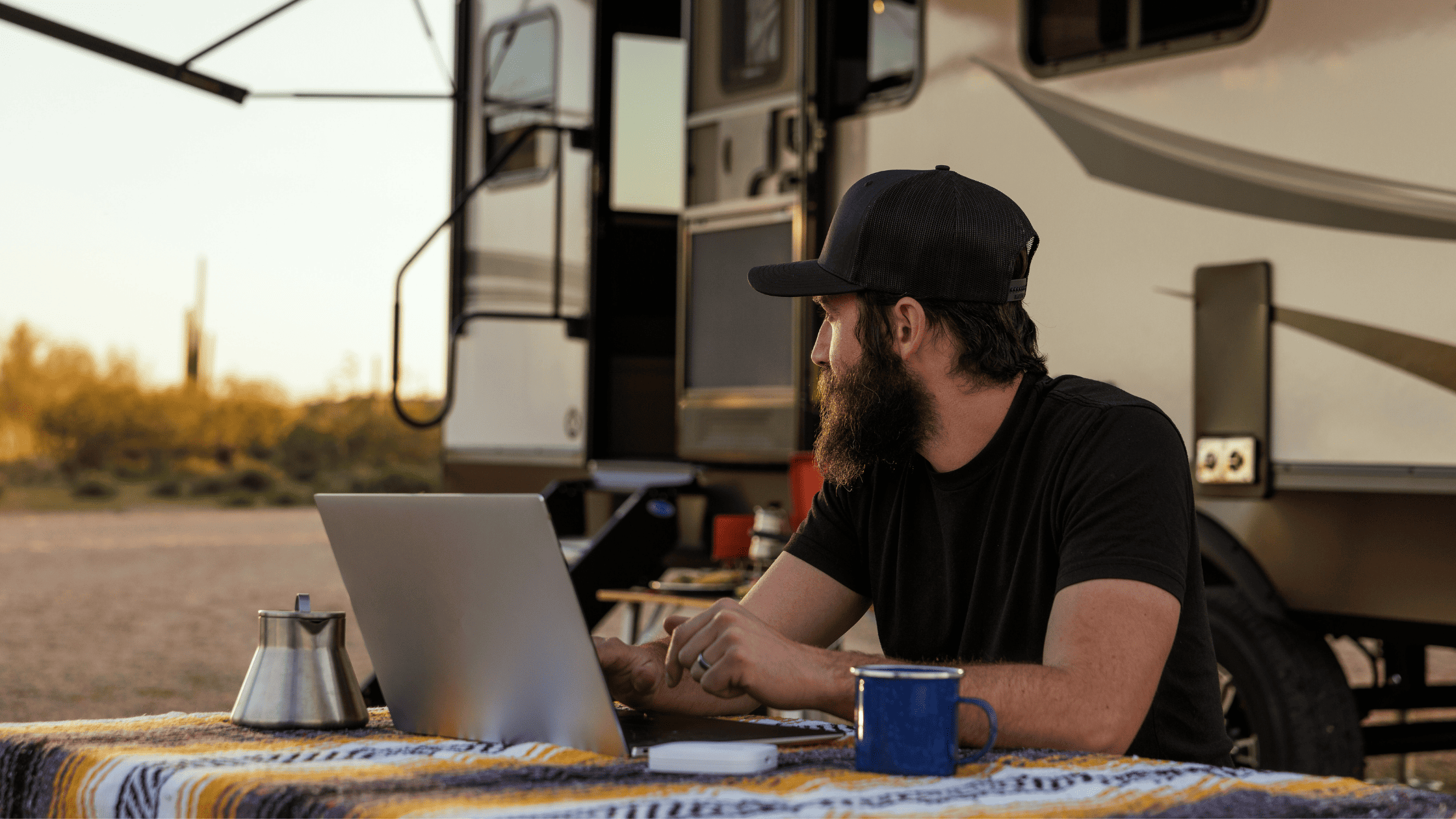
Looking for remote work that fits a mobile lifestyle? These digital nomad job ideas can support travel in an RV or van, as long as your skills, schedule, and connection match the work.
The best digital nomad jobs are not simply jobs you can do on a laptop. They are roles that fit your experience, give you a realistic path to income, and can survive the practical realities of a changing workspace. For RVers and vanlifers, that also means planning for dependable internet, time zones, quiet call space, and a backup when a campground signal is not enough.
This guide covers flexible work paths, what each one asks of your connection, and how to choose a role that makes the road feel sustainable rather than stressful.
In This Article
- How to choose a digital nomad job that fits your experience
- Remote-friendly career paths for travelers
- What type of internet each job needs
- How to prepare for remote work while traveling
- Frequently asked questions about digital nomad jobs
TL;DR
Digital nomad work can range from writing and virtual assistance to software development, design, teaching, sales, and customer support. The right fit depends on your skills, income goals, schedule, and tolerance for live calls. Before taking work on the road, build a reliable connection plan with enough upload capacity and a backup for deadline-sensitive days.
How to Choose the Best Digital Nomad Job for You
Start with the work you already know how to do. A new job title is not automatically a better nomad fit if it requires credentials, a large portfolio, frequent video meetings, or a fixed time zone you cannot maintain. Ask yourself:
- Which skills can I show through experience, samples, or certification?
- Do I prefer employee work, contract work, freelance projects, or a mix?
- How many calls, uploads, or live interactions does the role require?
- Can I create a quiet, dependable work block while traveling?
- What income and benefits do I need the work to provide?
There is no single best digital nomad job. The strongest choice is one that fits your current skills and leaves enough room for the travel style you actually want.
Digital Nomad Job Ideas for 2026
Writing, editing, and content strategy
Writers, editors, content strategists, and copywriters can work for companies, agencies, publications, or direct clients. The work is often asynchronous, which makes it easier to plan around travel days. Reliable internet still matters for research, project management, cloud documents, and client communication, but these roles are usually less vulnerable to a short outage than a job built around live calls.
Digital marketing and SEO
Digital marketers may manage paid campaigns, email, social media, search optimization, analytics, or client accounts. The role can be a strong fit for travelers who enjoy a mix of creative and analytical work. Expect web-based tools, dashboards, files, and occasional video calls, so plan for a dependable connection during reporting and client-meeting windows.
Graphic design, UI, and UX
Design work can be highly portable, but collaboration tools, large files, and cloud-based reviews can make upload speed important. Designers who work with video, animation, 3D assets, or frequent file transfers should prioritize both upload capacity and a backup connection rather than judging a campsite only by download speed.
Photography, videography, and content creation
Photo and video work can fit travel naturally, but it often produces the most demanding connection needs. Uploads, backups, client galleries, and edited video files can consume a large amount of data. Build your work plan around locations where you can upload reliably, and avoid promising delivery dates before you know the connection is adequate.
Web development, software, and IT
Developers, product specialists, QA testers, and IT consultants can work remotely across many industries. The day-to-day needs vary: some work is mostly asynchronous, while other teams rely on screen sharing, standups, remote access, or production support. Look closely at the employer's expectations for availability and emergency response before assuming the job is a fit for a mobile lifestyle.
Cybersecurity and technical consulting
Security analysts, consultants, and compliance professionals may be able to work remotely, but confidentiality and connectivity requirements can be stricter. Check whether the work requires a secure environment, a specific network configuration, managed devices, or a hardwired connection. When public Wi-Fi is part of the travel day, follow safer network practices and use tools approved by your employer.
Virtual assistance, operations, and project coordination
Virtual assistants, online business managers, project coordinators, and operations specialists help keep companies moving. These roles reward organization, communication, and reliable follow-through. They can involve many small tasks across email, calendars, project tools, and client messages, so a stable daily routine matters as much as raw internet speed.
Online teaching, tutoring, coaching, and customer support
These roles can be ideal for travelers who enjoy live interaction, but video sessions raise the stakes for connectivity. Plan for a quiet workspace, reliable upload speed, low latency, and a tested backup. If you are paid for scheduled calls, do not make campground Wi-Fi your only connection path.
Language translation and localization
Translators, interpreters, and localization specialists can work in a range of contract or employee roles. Written translation is often flexible and asynchronous, while live interpretation may demand an especially stable connection. Choose the work format that fits both your language skills and your travel routine.
Match the Job to Your Internet Needs
Remote work is not one-size-fits-all. Before accepting a role, define the tasks you cannot afford to interrupt:
- Mostly asynchronous work: Writing, research, design reviews, and project coordination can often tolerate occasional service gaps if you download key files in advance.
- Video and voice-heavy work: Tutoring, customer support, coaching, sales, and team meetings need dependable upload speed, reasonable latency, and a quiet place to work.
- Upload-heavy work: Video, photography, design files, cloud backups, and large software assets require a data plan and upload workflow that match the file sizes.
- Security-sensitive work: Technical, financial, legal, and healthcare-related roles may require company-approved devices, VPN use, or other security controls.
For a more complete planning guide, read how to work remotely in an RV and compare a dedicated mobile hotspot with a phone hotspot before your first long work trip.
How to Become a Digital Nomad Without Guessing
- Choose one realistic work path. Start with a role that builds on skills you can already demonstrate.
- Build a portfolio or proof of experience. Samples, case studies, certifications, and a strong professional profile matter more than a vague claim that you can work from anywhere.
- Test the travel workflow close to home. Take a few remote workdays from your RV or another mobile setup before committing to a longer trip.
- Plan connectivity before the deadline. Check coverage, understand your data plan, and carry a backup for important calls or uploads. Our RV Wi-Fi setup guide explains the basic equipment and testing steps.
- Protect your time and energy. Separate travel days from deadline-heavy workdays when you can. A mobile lifestyle still needs routine.
FAQs About Digital Nomad Jobs
What are the best jobs for digital nomads?
Good digital nomad jobs include writing, marketing, design, software development, virtual assistance, project coordination, tutoring, consulting, customer support, and translation. The best option depends on your experience and the connection reliability the work requires.
Do digital nomads need fast internet?
Not every job needs the same speed, but most online work needs a stable connection. Upload capacity and latency can matter as much as download speed for calls, remote collaboration, and sending large files. Test the exact tasks you need to perform, not only a single speed-test result.
Can I work remotely from campground Wi-Fi?
Sometimes, but do not assume it will be sufficient for video calls or time-sensitive work. Campground networks are shared and vary by site. Treat them as a bonus or backup unless you have tested them under the conditions you need.
How much data do remote workers need in an RV?
It depends on your work. Video calls, cloud backups, software updates, and streaming use far more data than email and documents. Use our data usage guide to estimate a plan around your actual habits.
More Essential Reading for Digital Nomads
Which TravlFi Device Is Right for You?
TravlFi offers flexible internet options for travelers who need a dependable connection on the road. Compare TravlFi devices and plans to find a setup that supports your workday and travel style.

Share: